


Two Rental Cars vs. One Van for Maui Families in 2026
Updated: Oct 19
The van that seems easiest on paper can become the least flexible choice once your family starts making different plans. When you’re weighing renting two cars vs one van for a large family, headcount is only part of the answer. Luggage, seating needs, driver availability, and daily schedules matter too. One vehicle keeps everyone together, but it also means coordinating every outing around the same ride.
To decide whether one van will fit your family and bags or two cars will make the trip smoother, consider how much you’re carrying, who can drive, and whether everyone expects to do the same activities at the same time. This guide compares space, schedules, drivers, and practical trip logistics so you can choose based on your plans rather than guesswork.
You’ll see when a minivan or SUV may suit a shared itinerary, when two cars offer useful independence, and what to consider for arrivals, parking, and driver coordination. Rental Car Maui™ offers new minivans, SUVs, and cars, giving families different vehicle categories to consider as they plan.
Key Takeaways
Compare passengers and luggage separately. Seat count alone won’t tell you whether bags can travel safely.
For renting two cars vs one van for a large family in Maui, weigh shared plans against the freedom to split up.
Use your family’s travel plans as a guide, then match them to the specific vehicle’s seating and cargo space.
Before reserving, map schedules, identify drivers, and compare the full terms for each vehicle option.
Choose a minivan, SUV, or cars based on your family’s actual needs, not headcount alone.
Table of Contents
Two Rental Cars or One Van in Maui: The Real Decision
One shared vehicle can make it easier for everyone to leave together, while two cars let family members split up and follow different plans. But headcount alone won’t settle renting two cars vs one van for a large family in Maui. The right fit depends on how many people are traveling, how much luggage they have, who can drive, and whether everyone expects to stay together throughout the day.
Use this comparison to identify what matters most for your trip:
Factor
One van
Two cars
Schedule
One shared departure and return plan
Separate outings or departure times
Luggage
All bags need to fit in one vehicle
Bags can be divided between vehicles
Drivers
One driver can manage group trips
Separate trips require drivers for both cars
Parking
One vehicle to park
Parking for two vehicles to coordinate
Flexibility
Everyone travels together
People can go different ways
The main decision is whether your family values traveling together more than having the freedom to split up. Your daily plans may make one shared ride convenient or make independent transportation more useful. For a sense of the places and activities that can shape an itinerary, explore Maui’s geography and attractions.
When one van tends to suit a family
A van may suit a group that plans to visit the same places, leave around the same time, and return together. One vehicle can simplify agreeing on meeting points, keeping track of keys, and getting everyone out the door without coordinating a second car. That convenience only helps if the specific vehicle can accommodate both your passengers and luggage. Check the stated passenger and cargo capacity against your actual bags, including bulky items, before deciding.
When two cars can make more sense
Two cars may suit a family with different plans, such as relatives who want an early start while others prefer a slower morning. Separate arrival times can also make two vehicles useful when travelers aren’t beginning the trip together. The trade-off is coordination: you’ll need a driver for each car and a plan for parking, meeting up, and keeping everyone informed. Two cars aren’t automatically more convenient or affordable. Compare the specific vehicle categories and rental terms, including the minivan, SUV, and car options, against your group’s needs.
Compare Passenger Space, Luggage, Drivers, and Maui Trip Plans
A vehicle can have enough seats for your family and still leave too little room for the bags everyone brings. Compare passengers and luggage as separate needs, then consider who will drive and how your days are likely to unfold. That gives you a better basis for choosing between one larger vehicle and two cars than headcount alone.
Seat count alone can’t tell you whether a vehicle fits your family. Passengers, luggage, and the space they need all matter. A seat may be available, but the combination of people and bags still needs to work for the trip. Consider whether loading everyone will feel manageable, especially if you expect to get in and out of the vehicle several times during the day.
Make an honest passenger-and-luggage count
Start with a traveler list, then create a separate inventory of belongings. Count checked bags and carry-ons individually, and note bulky or awkward items such as strollers, mobility equipment, or beach gear if your family will bring them. Don’t assume bags can be squeezed around passengers or carried unsafely.
Next, decide what needs to stay accessible during the drive. Snacks, jackets, or other items you’ll use along the way may need to be within reach rather than packed underneath other luggage. Compare your complete list with the stated passenger and cargo capacity for the specific rental class you’re considering. If your needs exceed that vehicle’s stated limits, reconsider the setup instead of relying on a best-case packing guess.
Match vehicle setup to drivers and daily plans
One larger vehicle means one car to operate, but it also makes the group’s movements dependent on that vehicle and its driver. With two cars, family members can separate for different activities or leave at different times. That flexibility only works if there’s a willing, eligible driver for each vehicle under the rental terms. Identify drivers early and account for any applicable requirements before comparing options.
Think through a typical day, not just the airport trip. Will everyone travel together, or might some people return earlier while others stay out? A larger vehicle may simplify loading the group, but its size may feel less comfortable to some drivers or make parking less straightforward in certain situations. Two cars can spread out passengers and bags, but they also mean coordinating two routes, parking spaces, and meeting plans.
Use this quick check before settling on a vehicle category:
Write down every traveler and each bag or bulky item.
Compare that inventory with the selected rental class’s stated capacity.
List who can drive each vehicle under its rental terms.
Mark any activities or arrivals that may require separate departures.
Consider loading, parking, and comfort across your planned days.
Once you have that trip brief, compare it with the available minivan, SUV, and car options. The best fit accommodates your actual passengers, bags, and driving plans, rather than simply looking roomiest or easiest at first glance.
Which Setup Fits Your Family? Compare These Maui Travel Scenarios
The largest group doesn’t automatically need one van. Split arrival times, different day plans, and luggage can change the calculation. Treat the scenarios below as decision aids, not guarantees. The fit depends on the specific vehicle’s stated passenger and luggage capacity and its rental terms.
Everyone arrives together and follows one itinerary
If the family arrives together and expects to explore as a group, one van may keep departures and meet-ups simple. Before choosing, compare every traveler and bag with the specific van class’s stated capacity. Also consider whether the designated driver is comfortable handling that vehicle, especially on days with frequent stops.
Arrivals, activities, or departure times are split
Two cars can help when some family members arrive later, want an early start, or plan activities that don’t line up with everyone else’s schedule. That independence comes with extra coordination: each car needs an eligible driver under its rental terms, and the group needs a plan for keys, parking, and meeting points. If the itinerary is shared and the vehicle capacity works, one van may still be the simpler choice.
Consider less obvious combinations, too. Your family may travel together most days but bring enough bulky gear for cargo space to become the deciding factor. Two cars could provide more room for bags when they’re divided thoughtfully, but only if the luggage fits within each vehicle’s capacity and passengers can ride comfortably. Don’t assume two cars solve a space problem without checking both vehicles.
On the other hand, a split itinerary doesn’t always require two rentals. If a few relatives can adjust their timing, or the group can share one vehicle for its main outings, a single van could remain practical. Think through the actual plan: who needs to leave first, who might return later, and whether anyone would be waiting for the driver. A clear picture of the day matters more than the group’s total size.
Parking and loading are part of the decision, too. One vehicle means a single car to load and park, while two cars mean coordinating both vehicles and finding space for each. The better arrangement depends on your plans and how comfortable the drivers are with their selected vehicles. Compare the available minivan, SUV, and car options against your trip needs rather than assuming one category fits every family.
Decision rule: If your family travels together and the chosen vehicle fits every passenger and bag, compare van options first. If arrivals, activities, or luggage needs pull the group in different directions, assess two cars. Then compare vehicle capacities, drivers, and rental terms before reserving.
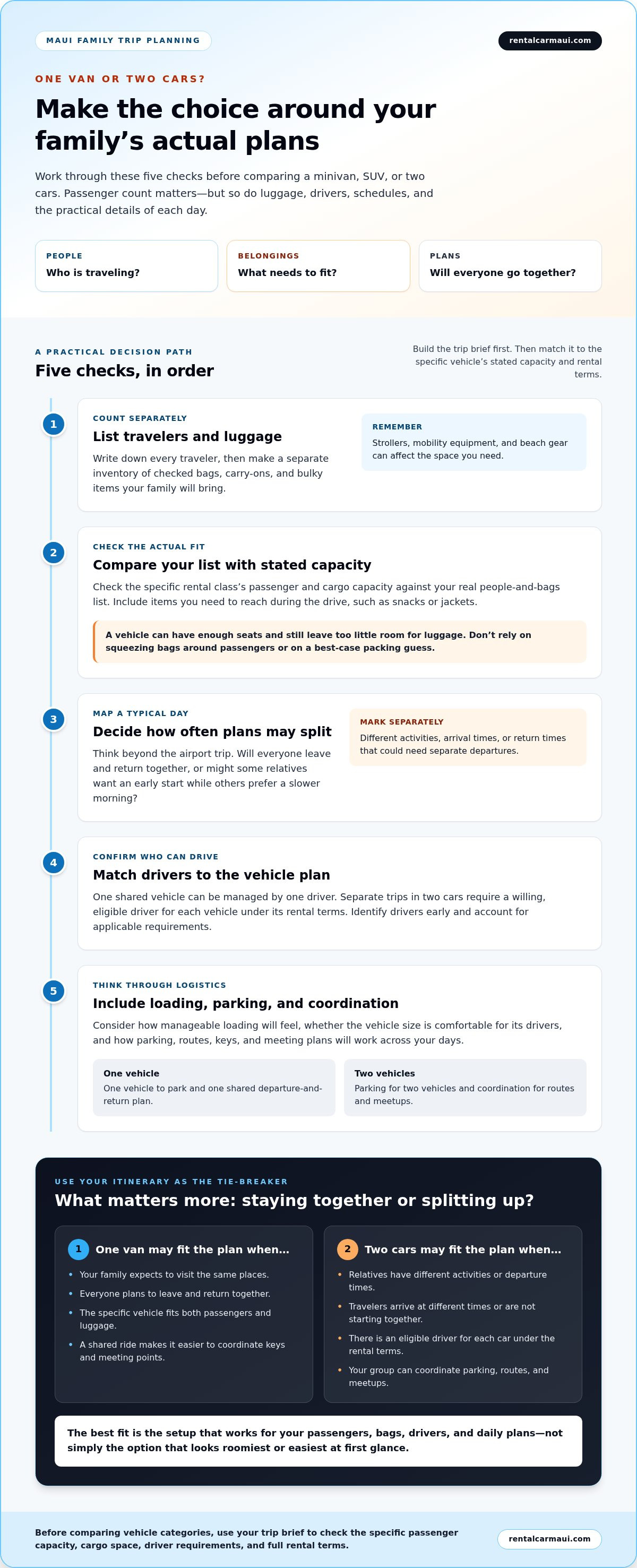
Plan the Rental: A Practical Checklist Before You Reserve
A little preparation can make the choice between renting two cars vs one van for a large family in Maui much clearer. Put the essential trip details in one shared brief so everyone is comparing the same passenger count, luggage, arrival plans, and driving needs. Then use this checklist to compare complete arrangements instead of choosing by vehicle label alone.
Build a trip brief that settles the vehicle question
Count travelers. List everyone who needs a seat, including children, and note any comfort needs that could affect how the group sits or travels.
Inventory the bags. Record checked bags, carry-ons, and bulky items separately. Note what needs to stay within reach during drives.
Map the schedule. Write down arrival times, shared outings, separate activities, and any plans that require an earlier or later departure.
Assign drivers. Identify a primary and backup driver for each proposed vehicle. Review the rental terms that apply to each driver and vehicle.
Compare vehicle categories. Match the trip brief against the stated passenger and luggage capacity for each specific option.
Keep the brief in a shared note or message thread so the family can update it as plans change. If a relative’s arrival time shifts or someone adds bulky gear, revisit the vehicle comparison before reserving. This record also helps prevent assumptions about who is driving or which bags will fit.
Compare complete rental arrangements, not just vehicle labels
A van, SUV, or car category doesn’t tell the whole story. Check each specific vehicle’s stated passenger and baggage limits against your inventory, then compare the complete rental terms for one vehicle and for two. Consider the full arrangement, including the number of vehicles and drivers involved, rather than assuming either setup will cost less or be simpler.
If your family is arriving by air, include pickup timing and the group’s arrival plan in the comparison. The airport car rental information can help you plan that part of the trip. To compare vehicle categories with your passenger list and bags, review the Maui car rental options that suit your plans.
Before you settle on an arrangement, read the terms for every vehicle and driver included in the quote. For two cars, account for separate drivers, keys, and arrival or meeting plans. For one van, make sure its stated capacity fits the entire group and luggage safely. Use your completed trip brief to compare suitable minivans, SUVs, and cars, then choose the setup that works for your itinerary.
Compare Maui rental vehicle options against your family’s trip brief.
Choose the Maui Rental Setup That Makes Your Family Trip Easier
There’s no automatic winner in the choice between two cars and one van. If one vehicle can safely carry your passengers and luggage, and your family mostly follows the same schedule, a van may keep the trip straightforward. If people have separate plans or need to come and go at different times, two cars may offer useful independence, provided you have drivers for both and are comfortable coordinating them.
Use this final decision rule
Lean toward one van when your group expects to travel together and the specific vehicle’s stated passenger and luggage capacity fits your trip. Lean toward two cars when independent schedules matter more than staying together. If driver eligibility, baggage space, or rental terms don’t line up with either setup, rethink the plan before reserving.
That’s the heart of renting two cars vs one van for a large family in Maui: choose based on how your family will actually travel, not simply how many people are coming. A larger group doesn’t automatically need a van, and two cars don’t automatically make every itinerary easier. Your trip brief should help you narrow the options without relying on assumptions about space or convenience.
Take the next step with a clear vehicle plan
Before choosing, have your passenger count, bag inventory, arrival details, daily schedule, and driver responsibilities in front of you. Compare those needs with the stated capacity and terms for each vehicle. A minivan, SUV, or car may suit different combinations of people, luggage, and plans. Maui Car Rental offers new vehicles alongside budget-friendly older options, so you can compare categories and vehicle types against your trip brief.
Keep the decision practical. If your family shares one itinerary and the capacity works, a single vehicle may be the simpler match. If schedules regularly diverge, consider whether the added flexibility of two vehicles is worth the extra coordination. Compare the rental terms for the complete setup, including the requirements that apply to its drivers.
With your plan in hand, explore Maui rental vehicle options and compare them against your family’s passengers, luggage, and travel schedule. A clear brief makes it easier to focus on suitable choices and choose a rental arrangement that feels comfortable for the whole group.
Make Your Family’s Rental Plan a Shared One
Before reserving, make sure everyone understands the plan, not just the person booking. Share the chosen setup, who’s driving, how arrivals will be handled, and what to do if someone’s schedule changes. That small step can prevent last-minute confusion and help the whole group start the trip on the same page.
The choice of renting two cars vs one van for a large family in Maui comes down to the arrangement that works with your real plans and feels manageable for your family. Maui Car Rental offers new minivans, SUVs, and cars, as well as budget-friendly older vehicle options and flexible rental durations. Airport and cruise-port rental services can support different arrival plans, too.
Have your trip details ready, then compare the rental options that suit your family’s needs. Compare Maui rental options for your family trip and take the next step with a plan that lets everyone look forward to the journey.
Frequently Asked Questions
Is a passenger van the same as a minivan?
No. “Passenger van” and “minivan” can refer to different vehicle categories, so don’t assume they have the same layout or space. Rental labels and configurations vary. A passenger van may be designed differently from a family-style minivan, but the category name alone doesn’t tell you what will suit your group. Compare the specific vehicle’s listed seating and luggage capacity with your travel needs before booking.
Can a rental van accommodate child seats and luggage?
It may, but fit depends on the specific vehicle, the child seats, and how much luggage you’re carrying. Check its stated seating and baggage capacity, and consider where child seats will be installed and which bags must remain accessible. Don’t count a seat as usable until you’ve considered the child seat’s space and the room left for passengers and bags.
Is one van always cheaper than renting two cars?
No. The total depends on the specific vehicles, rental periods, and applicable terms, so compare complete quotes for both arrangements. Include any quoted taxes, fees, add-ons, and other trip expenses rather than judging by the vehicle’s daily rate alone. For renting two cars vs one van for a large family in Maui, the option that looks less expensive at first may not be the best fit for your schedule or luggage.
What should we do if our family needs to change vehicles after booking?
Review your reservation’s change terms and request the vehicle change through the booking channel as soon as your plans shift. A change may depend on your reservation terms and the options available at that time, so don’t assume it’s complete until you receive updated booking details. If your passenger count or luggage has changed, revise your trip brief too, then compare the new vehicle’s stated capacity with your group’s needs.
Is it easier to divide rental costs when a family rents two cars?
It can be easier if each car is used by a distinct household or group that can manage its own share. But splitting the total evenly may feel unfair if one car carries more people, is used for more trips, or has different rental terms. Before booking, agree on a simple method for dividing the quoted rental costs and shared expenses. Clear expectations help prevent awkward conversations during the trip.
Should we choose a van if some family members have mobility needs?
Not automatically. Think about the specific person’s transfer needs, how they enter and exit the vehicle, and whether mobility equipment needs to travel with them. A van’s size or seating layout doesn’t by itself mean it will be easier to use. Compare the specific vehicle details with the traveler’s needs, and consider whether a different vehicle arrangement could make getting in, riding, and reaching planned stops more comfortable.


